

Do Dog GPS Trackers Need a Subscription? AirTag vs Fi vs Tractive
Disclosure: This page contains affiliate links. If you buy through them we may earn a commission at no extra cost to you — it never affects which products we recommend or how we rank them. How we review
Search results mix Apple AirTags, Fi collars, and Tractive clips in one pile, yet they run on different networks and billing models. Some hardware looks affordable because location service is subsidized by monthly fees; other tags skip subscriptions but are not GPS in the sense of a live moving map. Reading one comparison chart without checking connectivity specs is how owners end up with the wrong network for their neighborhood.
This guide separates Bluetooth item finders from LTE trackers, then walks through the three in-stock options on PetPicks using each listing’s connectivity language. Plan for ongoing cost before you clip anything to a collar, and test charging routines at home before you rely on a device on vacation.
Write down your typical walk routes and whether LTE signal is weak in those areas before you pay for a cellular plan.
Escape history matters: a dog that has bolted through a screen door has different needs than a couch potato who slips a collar once a year.
What “GPS” means on a pet product page
True live tracking usually means cellular data sending coordinates to an app, which almost always carries a monthly or annual plan after any trial. Bluetooth finders like AirTag report last-known proximity when other phones on the same ecosystem pass within range—they do not stream a moving dot across open country. Some apps show a map pin when a tag last pinged, which feels like GPS even when no satellite navigation is involved.
Marketing blurbs reuse GPS for anything map-related. Read connectivity specs: LTE, Find My, and subscription required are the phrases that predict your bill and blind spots. Rural property owners should assume cellular trackers need LTE coverage testing before purchase.
Carrier maps on your phone are a rough proxy for where LTE trackers may struggle—test on your own block first.
Bluetooth range is measured in tens of feet, not miles, which surprises owners who expect AirTag to behave like a car GPS.
Apple AirTag: no subscription, not cellular GPS
AirTag pairs to iPhone or iPad through Find My with no Apple fee for the tag itself. Precision Finding on supported iPhones helps when the tag is nearby; a built-in speaker aids under-cushion searches. For pets, owners attach it to a collar holder and rely on anonymous Find My network pings—not continuous maps.
Rural trails and low iPhone traffic mean stale locations compared with LTE collars. There are no native pet escape alerts in Apple’s software; treat AirTag as a low-cost backup to microchips and fencing, not primary wilderness tracking. IP67 splash resistance and a user-replaceable CR2032 battery suit everyday walks per the listing.
Replace the CR2032 when Find My reports low battery before a camping trip.
Third-party collar holders vary in retention—read reviews for your dog’s activity level before trusting a snap clip.
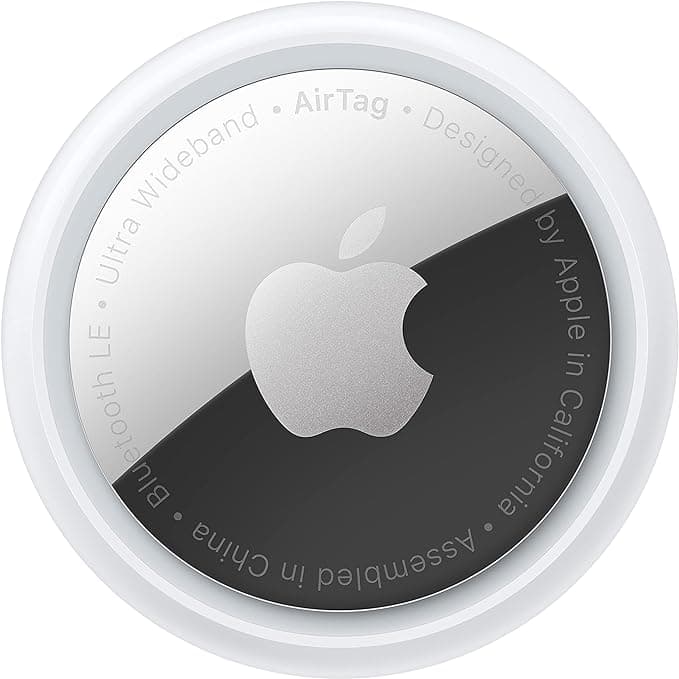
Apple AirTag
Apple’s AirTag uses the Find My network and Precision Finding on compatible iPhones—not standalone GPS—to help locate a collar attachment when nearby Apple devices pass within range.
Fi Series 3+: LTE GPS with required membership
Fi markets Series 3+ as nationwide LTE and GPS with live location, virtual safe zones, escape alerts, and Lost Dog Mode in the Fi app. The stainless, IP68 collar also logs activity and behavior flags per the listing, with wireless charging and an onboard LED. Every unit requires an active Fi GPS/LTE plan at activation—there is no free long-term tracking without membership.
Reviewers who accept the subscription often praise tracking in open areas; mixed feedback covers battery life shorter than marketing suggests, false escape alerts, and keeping Fi’s home base plugged in. Budget the hardware plus years of plan fees before choosing Fi over a clip-on tracker.
Lost Dog Mode is only useful if the collar has charge and the plan is active—keep those assumptions explicit in your family’s emergency checklist.
Activity graphs are interesting but secondary if your primary fear is door dashing.
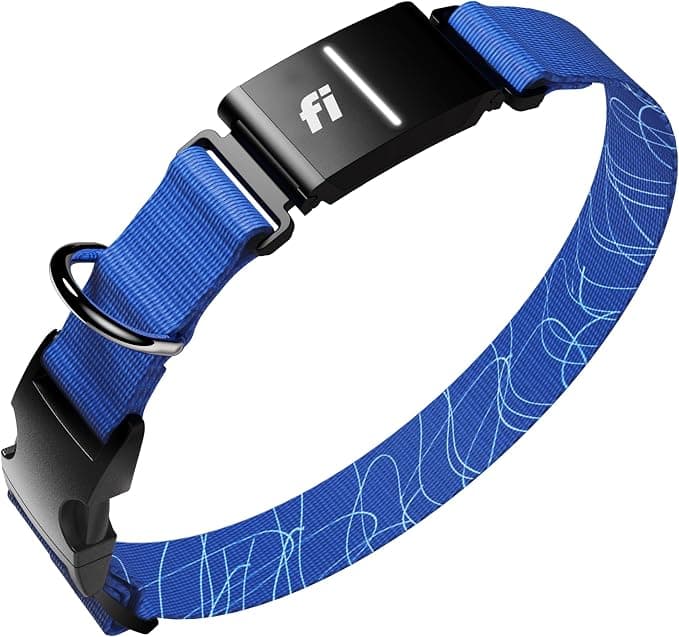
Fi Series 3+ Smart Dog Collar
Fi Series 3+ combines a stainless, IP68 GPS collar with escape alerts, activity and behavior monitoring, and an LED—Fi membership is required for LTE tracking.
Tractive GPS: subscription after trial, clip-on cellular
Tractive’s clip-on uses cellular GPS with live mode refresh in the app, virtual fences, and wellness metrics on newer firmware. The listing cites lightweight waterproof use for dogs over about eight pounds, with battery life idealized up to two weeks but reviewers often reporting closer to a week in practice. Mandatory paid subscription after trial is a frequent complaint alongside GPS drift in woods and rubber mount wear on active dogs.
Health metrics are informational—not veterinary diagnostics. Treat bark or wellness nudges as conversation starters with your vet, not as confirmed medical events.
Live mode refreshes faster but drains battery—use it when searching, not all day.
Carry the USB charging cable on road trips the same way you pack a leash.
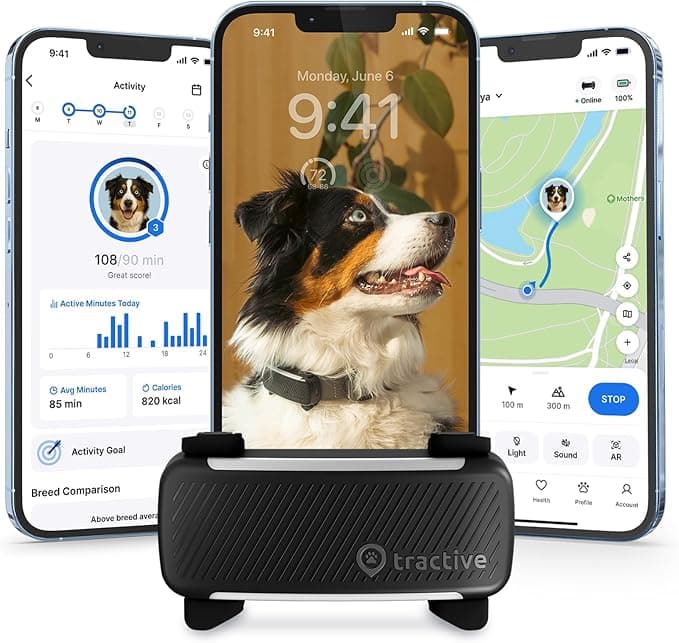
Tractive Smart Dog GPS Tracker
Tractive’s clip-on GPS tracker offers live location updates, virtual fences, and wellness metrics—but needs a paid subscription and earns mixed accuracy and durability reviews.
Choosing based on escape risk and phone ecosystem
Choose Fi or Tractive when you need live maps and leave alerts and will pay ongoing fees. Choose AirTag when you already use iPhone, want minimal recurring cost, and accept Find My limitations. Many households combine microchip registration with one cellular tracker for flight-risk dogs plus AirTag as a secondary ping near town.
Whichever you pick, test collar mount security with vigorous shaking and swimming if your dog does both daily. Clip-on trackers also need periodic charging—build that into your weekly routine so devices are not dead during an actual escape.
Android-only households should compare non-Apple cellular options first because AirTag depends on Apple’s Find My ecosystem. Write down each provider’s trial length and renewal price before activation so you are not surprised after the first month.
Tell dog sitters which tracker you use and where charging cables live.
Update contact info in the app the same day you change phone numbers.
Frequently asked questions
Is there any GPS tracker with no monthly fee?
AirTag has no subscription but is not LTE GPS. Full cellular pet trackers like Fi and Tractive require paid plans per their listings. Budget accordingly and treat AirTag as a supplement unless your walks stay near busy phone traffic.
Does Fi work without its membership?
No—Fi’s listing states an active Fi GPS/LTE plan is required at activation for tracking features.
Can I use Tractive only on vacations?
You can activate and pause service depending on Tractive’s current policies, but hardware is designed for ongoing use. Read plan terms before buying if you want seasonal tracking only.