
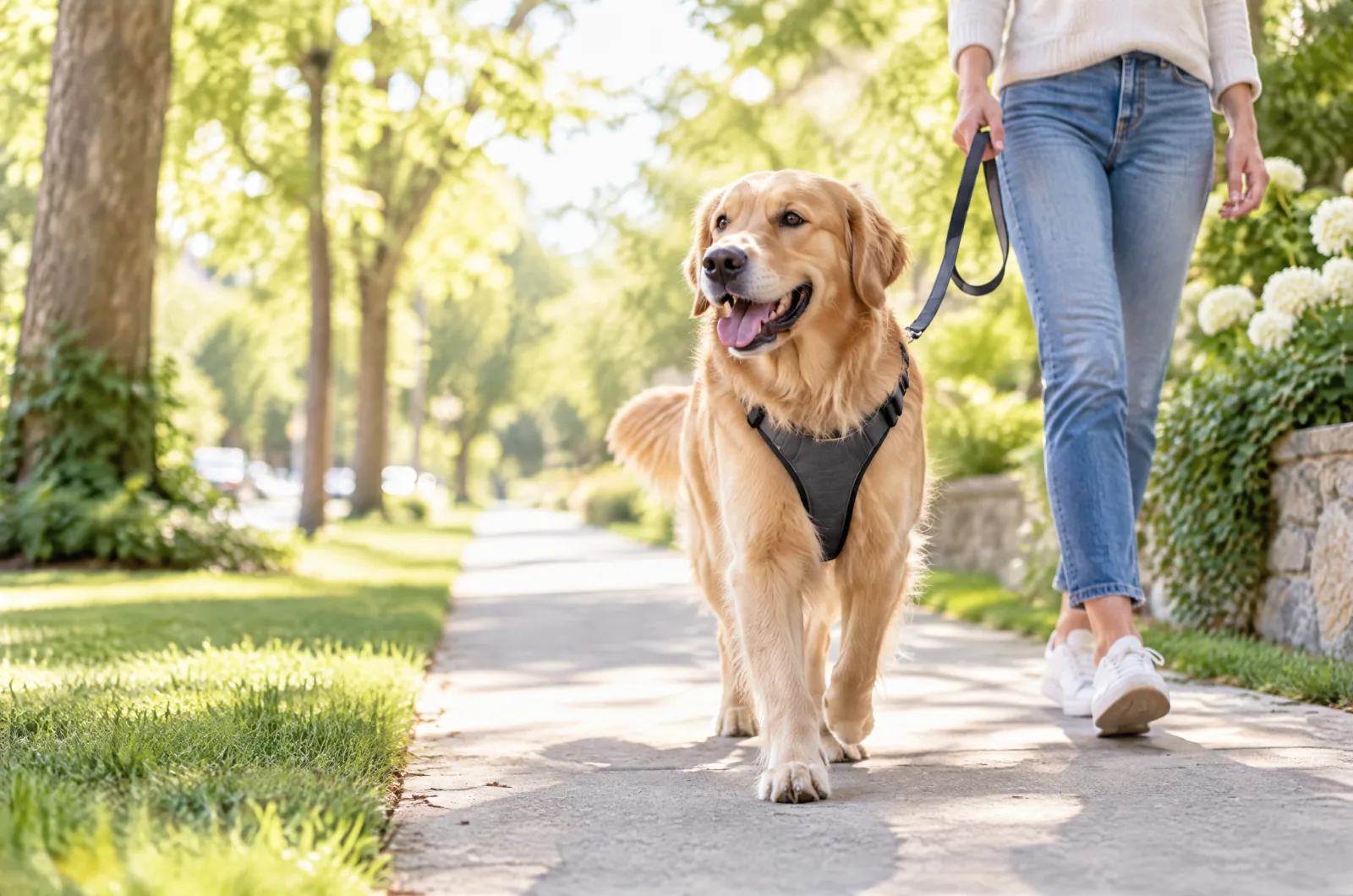
How to Stop a Dog Pulling on the Leash: Gear and Training
Disclosure: This page contains affiliate links. If you buy through them we may earn a commission at no extra cost to you — it never affects which products we recommend or how we rank them. How we review
Leash pulling is half equipment and half practice. A front-clip harness redirects motion when the dog lunges; it does not train loose-leash walking while you stare at your phone. Back-clip attachments on the same harness are comfortable for trained walkers but can encourage sled-dog mode in excitable adolescents.
Measure neck and chest before ordering any vest. Loose harnesses cause escapes at distractions; tight ones rub armpits raw within a block. The three harnesses below—PetSafe Easy Walk, rabbitgoo, and PHOEPET—illustrate front-clip training styles at different price points, all still needing consistent reinforcement on boring routes first.
Film a thirty-second clip of your worst pull so you can compare after two weeks of training.
Enlist everyone who walks the dog so front-clip rules stay consistent—mixed messages undo gear benefits.
Consistency beats intensity: one handler practicing daily front-clip walks improves pulling faster than four people using different harnesses on random days.
Rainy-day hallway walks still count as training when outdoor distractions are too high.
Why front-clip points change pulling physics
When the leash attaches at the chest, forward pull turns the dog’s shoulders toward you instead of letting them lean into a collar. That redirection is mechanical, not magical—it works best when you also stop walking the instant the leash tightens. Collars concentrate pressure on the throat; harnesses spread force across the chest, which is why many trainers prefer them for strong pullers.
Back clips sit behind the shoulder blades and let determined dogs lean into the harness like a draft harness. Use back rings only when your dog already offers slack leash on familiar routes.
Turn away from distractions when your dog fixates—changing direction teaches that pulling does not get forward motion.
Keep treats in the same pocket so you are not fumbling while the dog lunges.
PetSafe Easy Walk for lightweight front control
PetSafe’s Easy Walk Medium is a nylon halter-style harness with a patented martingale loop at the front. The listing states leash attachment at the chest to guide dogs and reduce throat pressure compared with collars when they pull. Medium lists roughly 20–50 pounds—measure girth and use PetSafe’s chart rather than guessing from breed photos.
Quick-snap shoulder straps and a color-coded belly strap simplify fitting, though reviewers report mixed durability at the front loop and some dogs slipping out if sized loose. It is less padded than vest models, which helps in hot weather but may rub bare armpits if fit is wrong.
Adjust the belly strap first after weight change—it loosens silently.
Check the front loop for fraying monthly if your dog is strong.
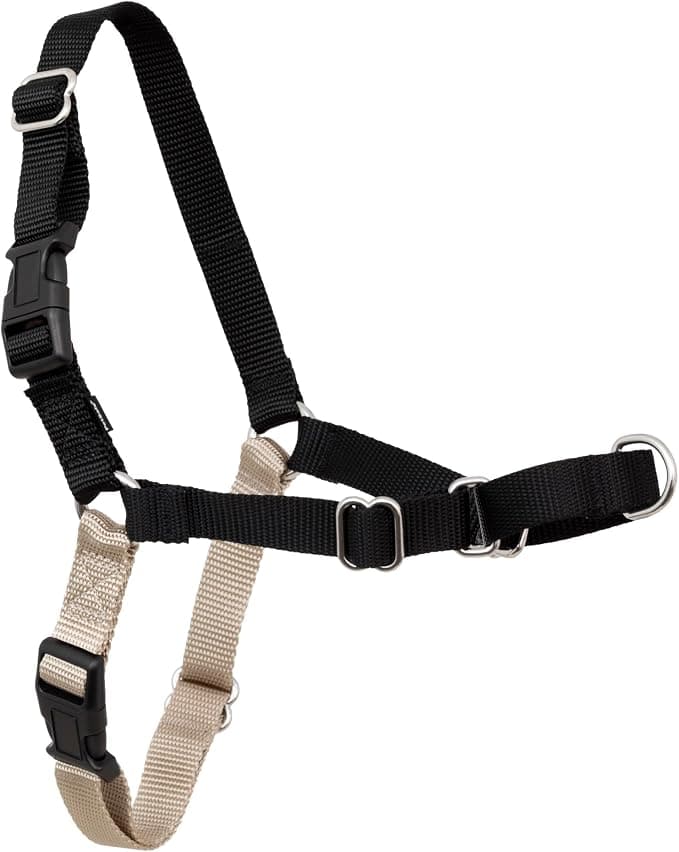
PetSafe Easy Walk Harness, Medium
Medium Easy Walk with front-chest martingale loop for dogs roughly 20–50 lb—measure girth and use PetSafe’s chart before ordering this minimal-coverage halter.
rabbitgoo and PHOEPET: dual rings and buckle layouts
rabbitgoo’s Large overhead vest lists front chest and back metal rings, four adjustment straps, and padded oxford with mesh. The listing directs you to clip the chest ring for training-style control and the back ring for jogging or hiking. PHOEPET’s Medium harness uses three buckles so many dogs avoid stepping through a head hole, with front and back metal loops plus a padded top handle for close restraint.
Polarized reviews on both often trace to loose fit rather than broken clips. Hand wash PHOEPET per care instructions and re-check straps after muddy walks.
Use the back ring only on the return leg when the dog is tired and calm.
PHOEPET’s top handle helps on stairs but is not a substitute for a second handler on large dogs.
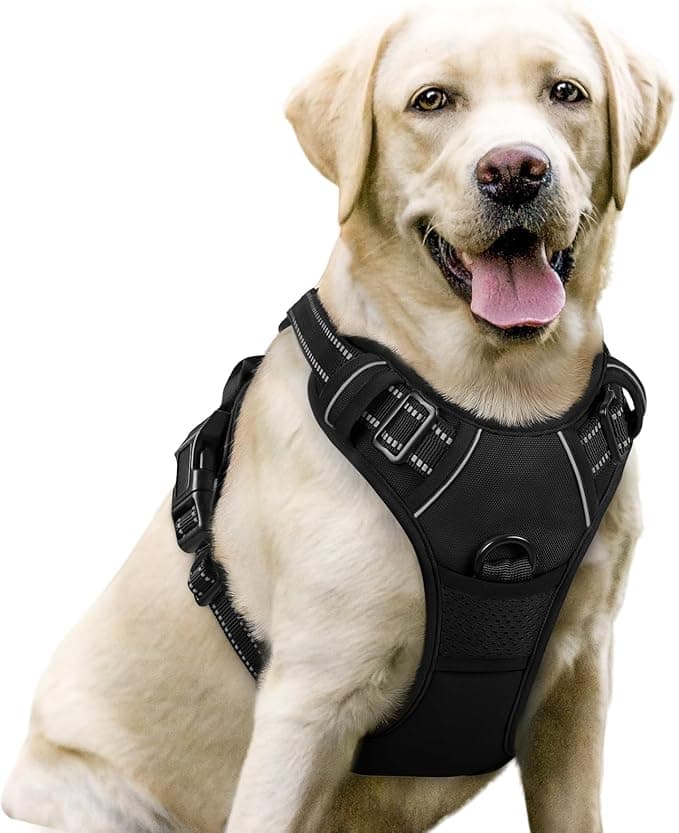
rabbitgoo No-Pull Harness, Large
Large-size vest with front chest and back leash rings, four adjustment straps, and reflective trim—measure neck and chest before buying this overhead harness.
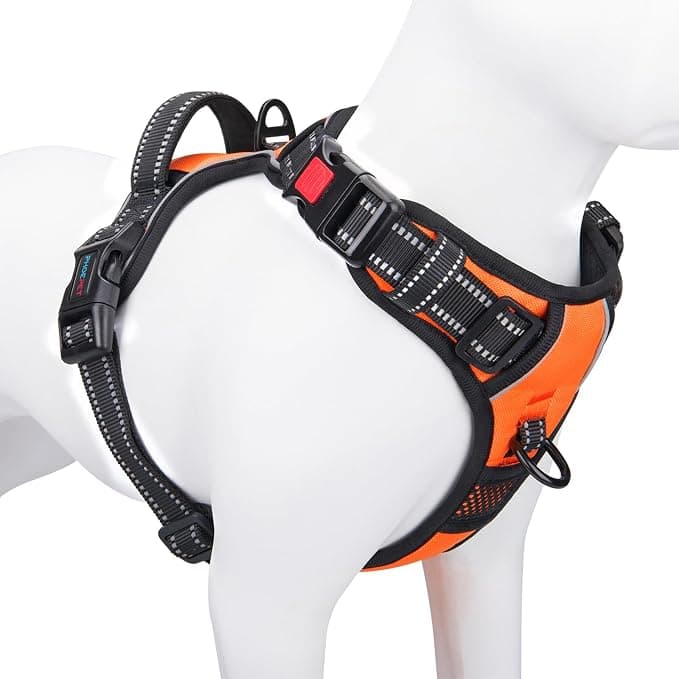
PHOEPET No-Pull Harness, Medium
Medium vest with front and back metal leash loops, three buckles (no over-head entry), reflective trim, and a padded back handle for close control.
Training habits that outlast new gear
Practice in boring environments before expecting calm on squirrel alley. Reward eye contact and slack leash with treats or forward motion as permission to continue. If pulling spikes suddenly in an adult dog, rule out pain with your vet before buying another harness.
Short sessions beat long frustrated walks: five minutes of deliberate loose-leash practice daily compounds faster than one angry loop around the block. Front-clip harnesses are management tools during that learning phase, not replacements for rewards and consistency.
Switch to a standard leash length during training— retractable leashes teach dogs that tension varies and often reward pulling with extra reach. Practice near home before busy parks so mistakes happen where you can reset calmly.
Mark and reward the first second of slack leash—even micro-success counts early on.
If training stalls, reduce distance to distractions before buying a fourth harness.
Document progress with weekly photos—coat, weight, and confidence change faster than memory.
Frequently asked questions
Will a front-clip harness stop pulling permanently?
It reduces leverage while you train. Long-term loose-leash walking still needs practice, rewards, and consistent rules—not just a new strap. Many dogs regress when harness fit loosens, so check straps weekly.
Why does my dog pull less on a collar but slip the harness?
Usually fit. Tighten chest straps per the listing, measure girth, and ensure the harness model matches your dog’s build. Escapes are rarely solved by a bigger size alone.
Can puppies use no-pull harnesses?
Yes, when sized correctly. PetSafe’s Medium starts around 20 pounds—use smaller sizes if your dog is lighter, and keep sessions short while joints develop.