
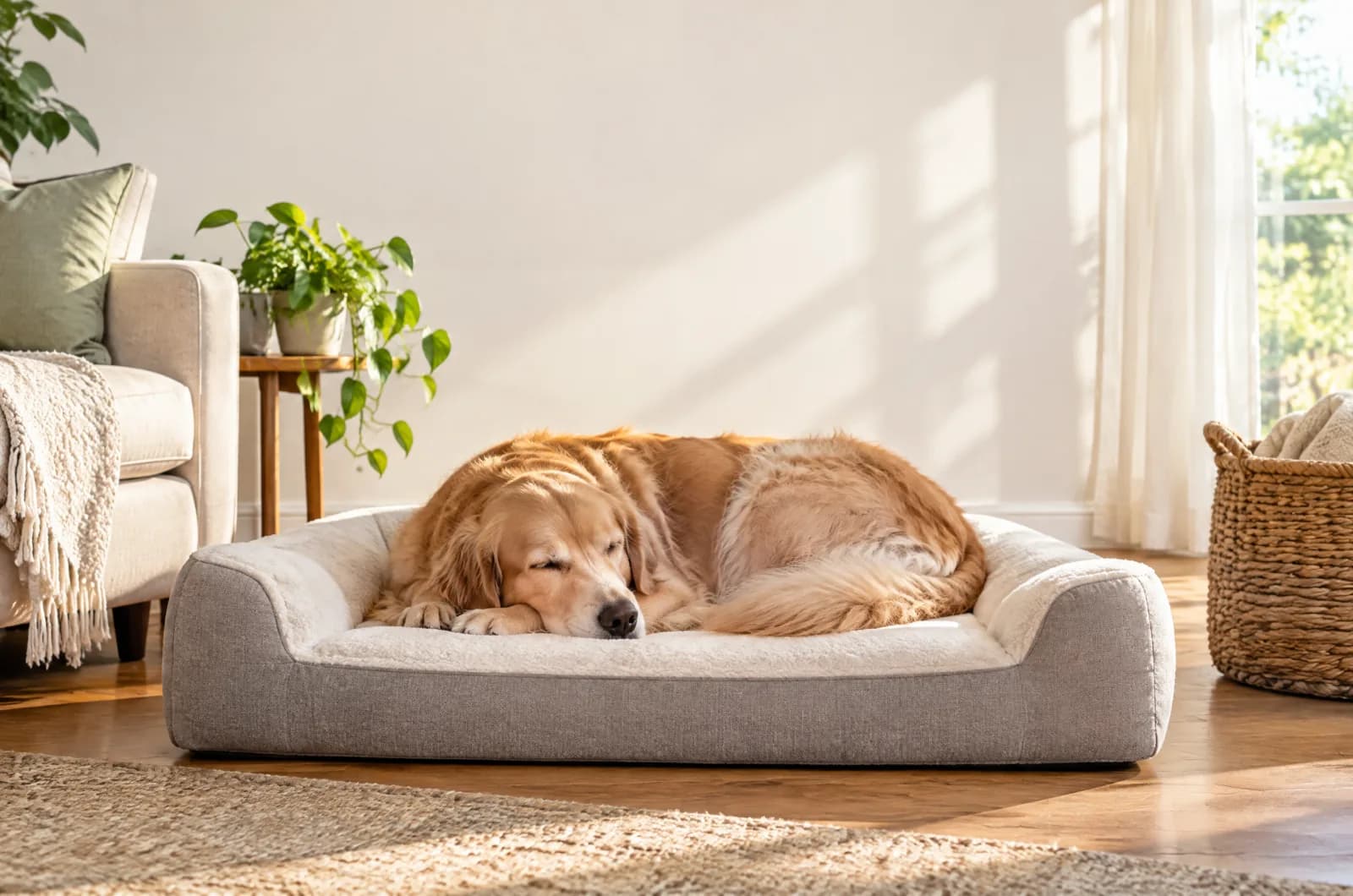
How to Choose a Dog Bed Size: Measure Twice, Buy Once
Disclosure: This page contains affiliate links. If you buy through them we may earn a commission at no extra cost to you — it never affects which products we recommend or how we rank them. How we review
Dog bed returns usually trace back to one mistake: buying the label size instead of the sleeping footprint. A dog that stretches full length needs a different deck than a curler, and listed weight limits sometimes disagree with the word Large on the box. Marketing photos also hide how much bolsters steal from the flat sleep area.
Use a tape measure once, note how your dog actually sleeps for three nights, then compare dimensions in listings before you checkout. The three beds compared at the end—Bedsure, Furhaven, and EHEYCIGA—illustrate common trade-offs between egg-crate orthopedic foam, convoluted sofa styles, and memory foam bolsters without pretending one SKU fits every breed.
Compare return windows and warranty language on the listing before you buy—beds are bulky to ship back.
Photograph the bed on arrival if bolsters look underfilled so you have documentation for support requests.
Measure your dog and match bed shape to how they sleep
Lay a measuring tape from nose tip to tail base while your dog lies in their longest position, then add two to four inches so they are not hanging off the edge. Measure shoulder height when seated to see whether bolsters will block their view or support their chin comfortably. If they share the bed with another pet, measure both bodies side by side—not just the larger dog.
Side sleepers who sprawl need rectangular decks with open space and minimal rim. Curlers and leaners often prefer bolstered sofa shapes that give a rim to rest their head. Weight matters for foam compression, but listings may show a maximum weight recommendation that conflicts with breed labels—trust exterior length and width over marketing names when they disagree.
If your dog sleeps half on tile because the bed is too warm, try breathable covers and placement away from heat vents before blaming foam quality. When in doubt, size up on footprint if your floor space allows.
Record a short video of your dog’s favorite sleep pose; photos lie when dogs curl tightly.
Bring those measurements to every listing you compare so you are not seduced by marketing photos of smaller breeds.
When foam is worn out versus when you need a larger size
Flattened centers, permanent odors after washing, or rips that expose foam mean it is time to replace—even if the cover still zips. Senior dogs and heavy breeds compress foam faster; if your dog struggles to stand after long naps, measure again and compare to a thicker option before assuming arthritis alone.
Rotating two covers while one washes extends bed life and reduces downtime when accidents happen. Chewers who shred covers need management and toys, not repeated bed purchases every month. A dog whose paws hang off the edge needs a longer deck, not just thicker foam.
Write the purchase date inside the cover tag so you remember when foam started flattening.
Two thin beds stacked is not a substitute for one properly sized deck—pressure points still form at the gap.
Egg-crate peaks and convoluted foam bases spread weight across air gaps—common in budget orthopedic listings and often enough for young healthy dogs that simply need off-floor sleep.
Memory foam layers compress more slowly and appear in mid-tier bolstered beds; they may help dogs that already struggle to rise, but listings still avoid medical promises.
Plush faux-fur surfaces feel luxurious yet trap hair in reviews; prioritize washable covers if allergies or shedding dominate your household concerns.
Bedsure and Furhaven: large-size listing specs
Bedsure’s orthopedic sofa lists about 35 by 25 inches with four bolsters and a 30-pound maximum weight recommendation on this SKU—reviewers often call it snug for large breeds despite the large label.
Furhaven’s large sofa lists 36 by 27 inches with a 28 by 23 inch sleep surface and support up to 55 pounds, with convoluted foam, a washable cover, and a listing warning against destructive chewers. Reviewers often mention faux fur trapping lint and hair.
Egg-crate and convoluted foams spread weight across air gaps—common in these listings and often enough for healthy dogs that simply need off-floor sleep.
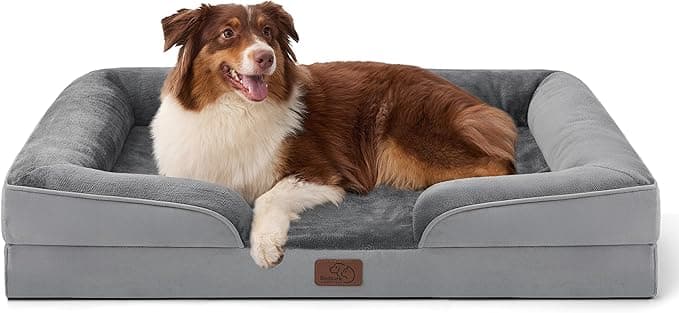
Bedsure Orthopedic Dog Bed
Egg-crate orthopedic foam with four bolstered sides and a removable, machine-washable cover the listing describes as waterproof—solid everyday support for small and medium dogs who like a couch-style bed.
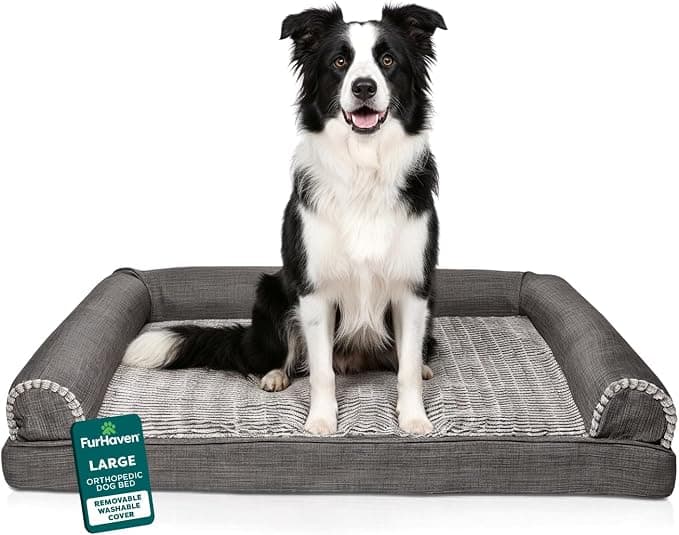
Furhaven Orthopedic Dog Bed - Luxe Faux Fur Sofa
Furhaven’s sofa-style bed uses convoluted egg-crate foam and faux fur bolsters with a zippered, washable cover—listed for dogs up to 55 lb in the large charcoal size.
EHEYCIGA and washability checks before you buy
EHEYCIGA Large lists a 36 by 27 inch deck with memory foam plus egg-crate foam, three bolsters, a removable cover, and a waterproof layer on the main pad but not the bolster fabric.
Customer summaries split on long-term cover durability after many wash cycles; plan to remove foam inserts when directions require it.
Choose by measured footprint and weight class, verify bolster fill on delivery, and skip plush models if your dog shreds bedding.
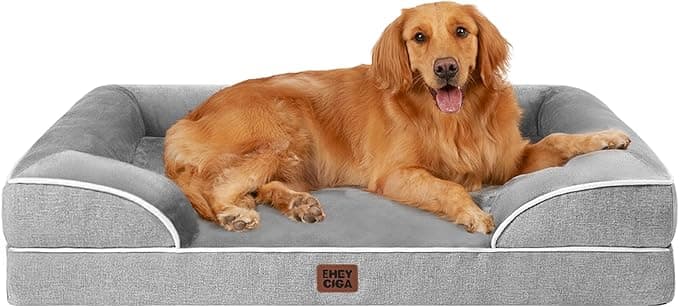
EHEYCIGA Orthopedic Dog Bed - Large, Grey
Large bolster-style orthopedic bed with memory foam, egg-crate support, and a washable cover. The listing places waterproof film in the sleep surface while bolsters stay fabric-only.
Frequently asked questions
Should I size up for a growing puppy?
Size for adult length if you want one bed through growth, but expect extra space to undermine crate training early on. Many owners use a smaller washable bed first, then upgrade when weight stabilizes.
Why do weight limits differ on similar Large beds?
Brands test foam compression differently and use inconsistent labels. Exterior dimensions and owner reviews about bottoming out are more useful than the word Large alone.
Do bolsters reduce usable space?
Yes—the sleep surface inside bolsters is smaller than the outer footprint. Measure the listed sleep deck, not just overall length. Dogs that stretch straight often need the sleep surface length, not the outer rim dimensions.